There is a specific kind of magic we expect when we hear the chime of a Nintendo Switch booting up a Pokémon title. Usually, it involves a bright-eyed protagonist, a backpack, and a quest to be “the very best.” However, Pokémon Pokopia, which arrived on the Nintendo Switch 2 last week, is not that kind of game.
At first glance, Pokopia is visually good. It presents a vibrant, high-definition aesthetic that feels like a polished fusion of Animal Crossing and Dragon Quest Builders. The colours are saturated, the frame rate is smooth, and the world looks like a living watercolour painting. But as I spent more time within its borders, I realised the vivid art style serves as a beautiful mask for something much more profound.
Don’t Feel like Reading? Listen to the Entire Review Here
A World Left Behind
In a daring departure from the franchise’s formula, Pokopia takes place in a Kanto region that has been completely abandoned by humanity. There are no bustling cities, no shouting Gym Leaders, and no crowded Pokémon Centres. Instead, you explore the skeletal remains of towns and cities that are now overgrown ruins.
You play as a Ditto who has assumed a humanoid form to assist a Professor Tangrowth. Your mission isn’t to catch them all for sport, it is to restore an environment that has been left to decay. The narrative weight of exploring collapsed buildings and reading the discarded diary entries of long-gone trainers is surprisingly heavy. It is a “cozy game” with a heavy heart, tackling themes of abandonment and ecological collapse head-on.
The Gameplay of Healing
The core loop of Pokopia is centered on restoration rather than combat. To attract Pokémon back to these desolate areas, you must build habitats and nurse the land back to health. There is an incredible sense of satisfaction in clearing debris from a poisoned pond and waiting (sometimes for ages) until a Squirtle finally feels safe enough to return.
The game thrives in its silence. Without the constant interruption of battle music or rival encounters, you are left alone with the atmosphere. Finding a “trace” of a Pokémon or a relic from the past carries a wave of melancholy that I have never experienced in a Pokémon game before. It respects the player’s intelligence, trusting us to sit with the sadness of this ruined world without needing to distract us with constant action.

A Masterpiece of Hope
Despite the dark undertone of a post-human world, Pokémon Pokopia is ultimately a story about hope. It isn’t about mourning what was lost, but about finding a new way to live alongside Pokémon without the rigid structures of Leagues or Gyms. It is a bold experimental risk that pays off brilliantly.
Watching a patch of grass you spent hours revitalising finally play host to a wandering Bulbasaur is more rewarding than any Badge I’ve earned in the last thirty years. It is a game about healing, both the land and the spirit.

The Expansion of the Multiverse
Just when you feel you’ve mastered the ruins of Kanto, Pokopia throws a curveball in the form of “Area Gates”. These doors appear on the map, acting as gateways to other zones of the world. You start in Withered Wasteland and you could go to Bleak Beach, Rocky Ridges or Sparkling Skylands as you gain levels. It’s a brilliant way to expand the map without feeling repetitive, offering a glimpse into “what if” scenarios and very different environment mechanics that keep the exploration fresh.

Capturing the Quiet Moments
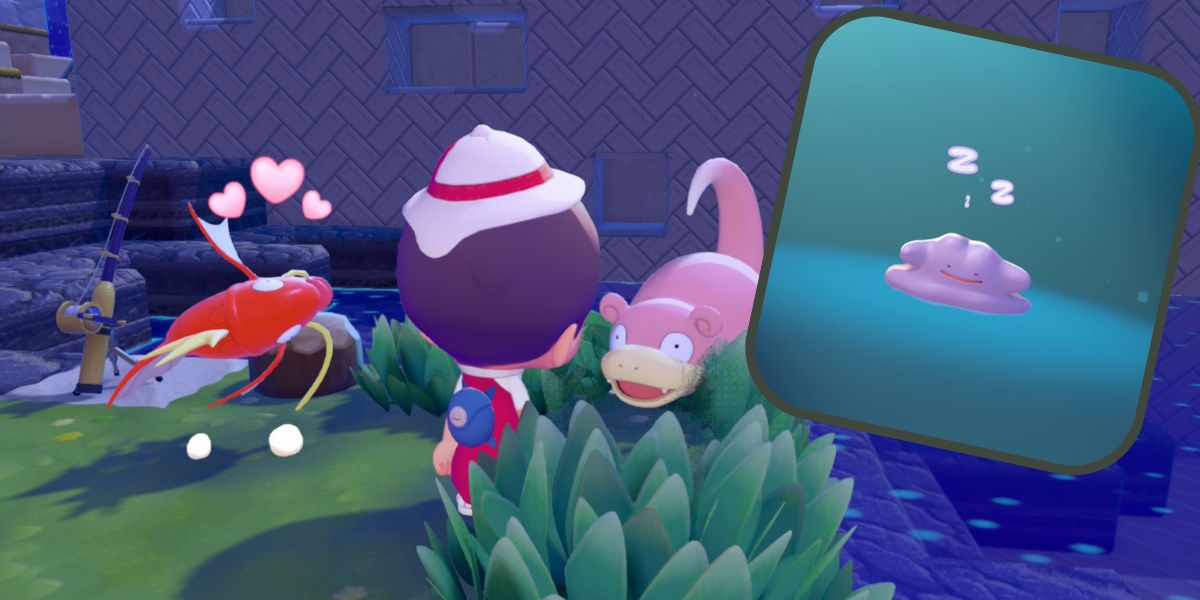
A standout feature is the photography mechanic, which feels far more integrated than a simple “Photo Mode”. To progress your research for Professor Tangrowth, you are tasked with capturing Pokémon in their natural, undisturbed states. There is a genuine thrill in crouching behind a rusted Corviknight taxi, waiting for the perfect light to hit a sleeping Pikachu. These photographs aren’t just for your digital album, they act as “blueprints” for restoration, helping you understand exactly what a species needs to thrive in a specific biome or even using reference images to recreate items via an in-game 3d printer.

The Heart of the Bond
Keeping your Pokémon happy in Pokopia is a far cry from simply feeding them berries to win a battle. Because there is no traditional training, their emotional state directly impacts the health of the surrounding environment. An unhappy Pokémon will stop tending to the land, causing your hard-earned gardens to wilt. You have to spend genuine time interacting with them, learning their preferences for certain terrain or even just sitting quietly beside them. It reinforces the game’s central theme: this isn’t a world of tools and weapons, but a delicate ecosystem that requires empathy to survive. If I can make any suggestion it’s don’t let the end of game be the goal, take your time with this one to really immerse yourself in the experience.
If you are looking for a mindless RPG, this might not be for you. But if you want a Pokémon experience that moves your emotions and offers a sophisticated take on a beloved universe, Pokopia is the “must-play” title of 2026 and dare I say it, a contender for Game of the Year.